About Course
Burnout, Compassion Fatigue and Vicarious Trauma
You might notice you’re more tired than usual. Less patient. Perhaps you’re thinking about work long after you’ve finished, avoiding certain conversations, or finding it harder to switch off.
You might feel guilty for not having the same energy or empathy you once did. So you keep going.
When your work involves regularly hearing about trauma, abuse and distress, it can affect you too.
These responses are not signs that you are less capable or less committed. They can be signs that the work is taking a toll.
Recognising that matters because caring for others should not require sacrificing your own wellbeing.
About this course
This self-paced course explores burnout, compassion fatigue and vicarious trauma within emotionally demanding work, with a particular focus on domestic abuse practice.
You’ll explore how repeated exposure to trauma and distress can affect professionals emotionally, physically and cognitively, and consider the different ways these responses can show up in ourselves and others.
The course will help you recognise avoidant, ruminative and hypervigilant responses, understand your own signs of stress and consider the factors that can increase or reduce their impact.
Importantly, this isn’t simply about individual resilience or telling people to practise more self-care.
Sustainable practice is a shared responsibility.
You’ll consider the role of personal awareness and boundaries alongside psychological safety, supportive relationships, reflective supervision and organisational responsibility.
This course explores potentially sensitive topics including trauma, domestic abuse and the impact of emotionally demanding work. Please take care of yourself while completing the course and access support if you need it.
Course Content
WELCOME & INTRODUCTION TO THE ENGAGE APPROACH
-
WELCOME & INTRODUCTION TO THE ENGAGE APPROACH
-
Useful Numbers And Resources
-
Self Paced Recovery Programmes for Victim-Survivors.
SECTION ONE – TRAUMA
SECTION TWO – BURNOUT, VICARIOUS TRAUMA AND COMPASSION FATIGUE
SECTION THREE – RECOGNISING THE SIGNS AND PROTECTING WELLBEING
SECTION FOUR – SUPPORT AND SUSTAINABLE PRACTICE
SECTION FIVE – REFLECTION, RESOURCES & NEXT STEPS
ASSESSMENT
CLOSE
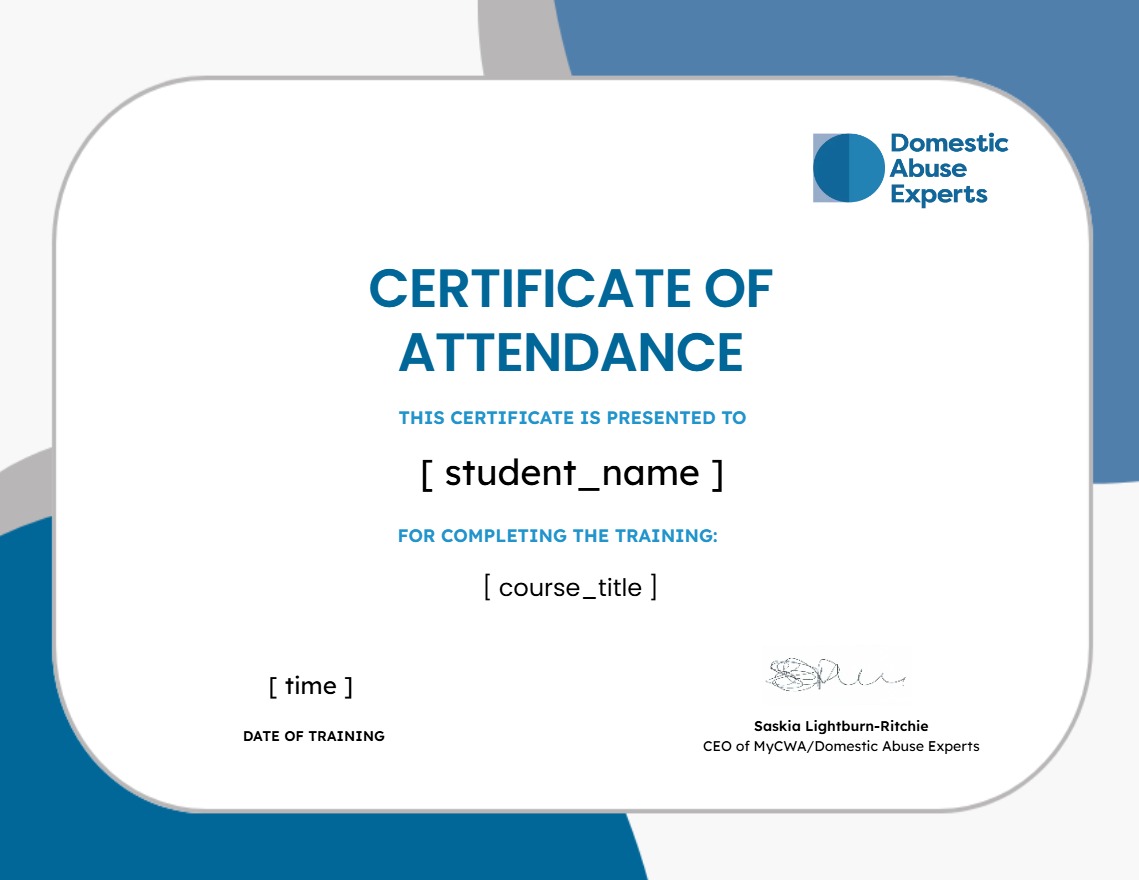
Earn a certificate
Add this certificate to your resume to demonstrate your skills & increase your chances of getting noticed.