About Course
Understanding People Who Harm
They may be charming, articulate and cooperative with professionals. They may present themselves as the person being wronged, minimise what has happened or explain their behaviour as a reaction to stress, conflict or someone else’s actions.
Individually, incidents can appear minor, disconnected or even understandable.
But domestic abuse is rarely understood by looking at one incident alone.
It is the pattern, context and impact of behaviour that can reveal what is really happening.
Understanding people who harm means looking beyond what someone says to consider how their behaviour affects the safety, freedom and choices of others. It also means recognising that people who use harm are not all the same, and that understanding different patterns of behaviour is important when assessing risk and deciding how to respond.
About this course
This self-paced course explores the behaviours, patterns and dynamics associated with people who use harm within intimate and family relationships.
You’ll consider how coercion, control and other harmful behaviours can operate over time, and why focusing solely on individual incidents can give an incomplete picture of risk.
The course introduces different typologies of harmful behaviour and explores how context, intent and impact can help professionals develop a more informed understanding of what may be happening within a relationship or family.
Throughout the course, you’ll be encouraged to use professional curiosity, challenge assumptions and maintain a clear focus on the experiences and safety of victim-survivors and children.
Understanding behaviour does not mean excusing it.
We can seek to understand why someone behaves as they do while still holding them accountable for the harm they cause.
This course covers sensitive topics relating to domestic abuse and harmful behaviour. Support information is provided at the beginning of the programme.
Course Content
WELCOME & INTRODUCTION TO THE ENGAGE APPROACH
-
WELCOME & INTRODUCTION TO THE ENGAGE APPROACH
-
Useful Numbers And Resources
-
Self Paced Recovery Programmes for Victim-Survivors.
SECTION ONE – UNDERSTANDING PEOPLE WHO HARM
SECTION TWO – TYPOLOGIES
SECTION THREE – PROFESSIONAL JUDGEMENT AND PRESENTATION
SECTION FOUR – STALKING
SECTION FIVE – REFLECTION, RESOURCES & NEXT STEPS
ASSESSMENT
CLOSE
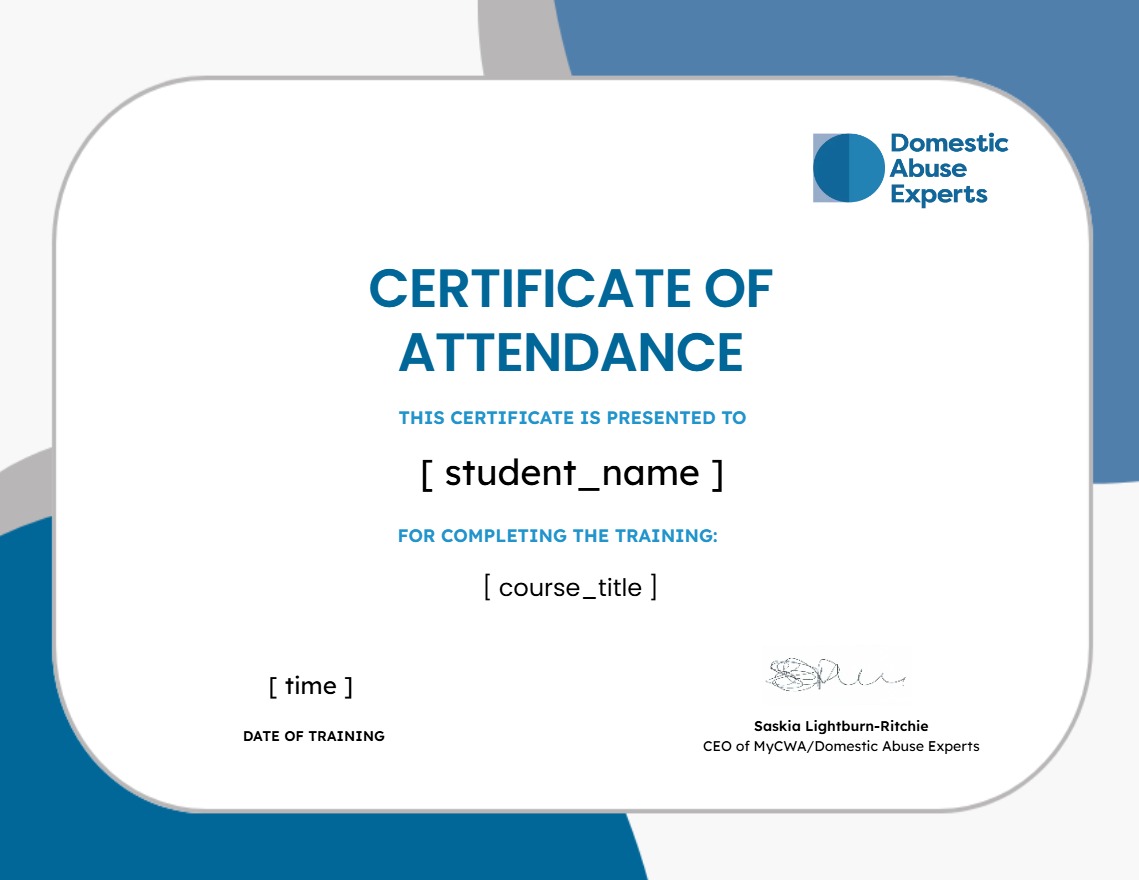
Earn a certificate
Add this certificate to your resume to demonstrate your skills & increase your chances of getting noticed.